Girls-mag
: In some regions, like Japan, girls' magazines like Cobalt (est. 1982) became launchpads for "girls' novels," where female friendship took center stage, often replacing traditional heterosexual romance as the primary narrative bond. The Dual Nature of Content
: Modern research into these magazines highlights five recurring themes: the body, sex, male-female relations, female empowerment, and reflexivity.
While many magazines have moved toward empowerment and political awareness—exemplified by Teen Vogue's shift toward social justice—they still exist in an environment of conflicting messages.
Historically, titles like CosmoGirl , Teen Vogue , and Girlz dominated the market, acting as mentors for adolescent girls. These magazines provided more than just entertainment; they offered a "script" for navigating the transition from childhood to adulthood.
In many parts of the world, the "mag" or "club" format is used as a tool for public health and social progress. Analyzing Postfeminist Themes in Girls' Magazines
Whether looking through a historical lens, a sociological perspective, or a digital-first modern approach, these publications remain a primary battleground for defining what "femininity" entails. The Evolution: From Print Icons to Digital Spaces
: Researchers often point out a "recent trend" in media to simultaneously sexualize and empower women, creating a confusing landscape for young readers.
How to Install Windows® 10 To A GUID Partition Table (GPT)
Properly Install Windows® 10 on Your Storage Disk With UEFI Enabled In The System BIOS And The GPT (GUID Partition Table) Created
Summary
We recommend performing Windows® 10 installations enabling UEFI with a GUID Partition Table (GPT).
Some features may not be available if you use the Master Boot Record (MBR) style partition table.
Configure a system to install an OS to a GUID Partition Table (GPT) partition girls-mag
| Note |
- We highly recommended performing a backup of your data. If you have a second disk drive with enough available capacity, you can create a system image and recover the full installation as it was before you started this procedure.
- Screenshots and directions below are examples. Consult with your motherboard or system manufacturer for specific BIOS instructions.
|
- Connect a USB Windows® 10 UEFI install key
- Boot the system into the BIOS (for example, using "F2" or the "Delete" key)
- Locate the "Boot Options Menu"
- Set Launch CSM to "Enabled." If CSM is set to "Disabled," you can skip to step 8 below
- Set Boot Device Control to "UEFI Only"
- Set Boot from Storage Devices to UEFI driver first
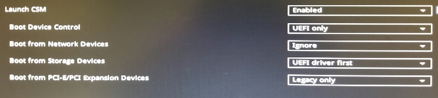
- Save your changes and restart the system.
- Reenter the BIOS (for example, using "F2" or the "Delete" key).
- Confirm in the Boot Priority List that the "USB UEFI OS Boot" option is at the top of the list.
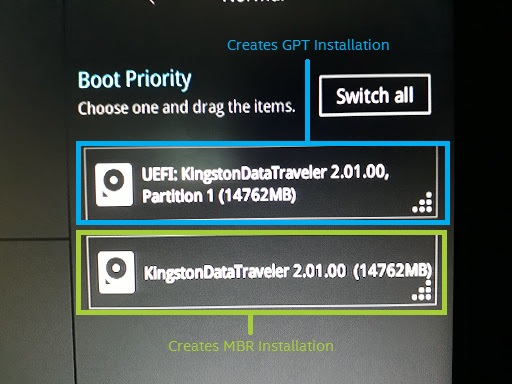
- Reboot the system and install Windows* as usual.
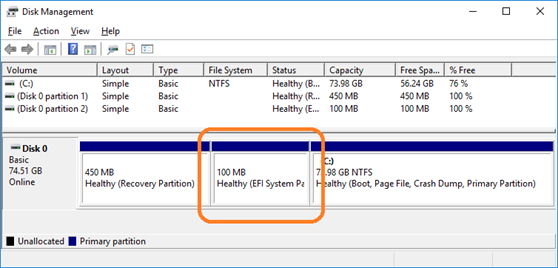
Confirm that Windows* is installed to a GPT partition.
- Boot into Windows*
- Open Disk Manager (For Windows® 10, press the "Windows*" key and the "X" key simultaneously, then click "Disk Manager"). You see three partitions including the EFI System Partition.
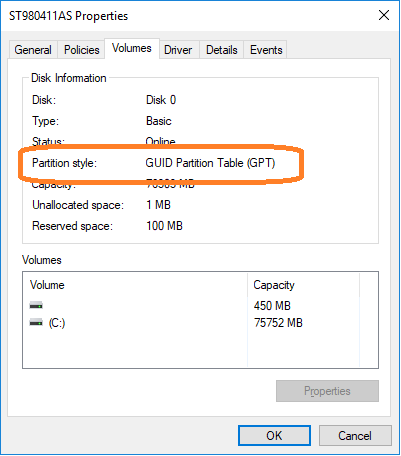
3. Right-click the disk shown as (Disk x, Basic, Capacity, Online) on the left
4. Select "Properties"
5. Click the "Volumes" tab. Here you can confirm the "Partition style".
Questions? Check out our Community Forum for help. : In some regions, like Japan, girls' magazines
Issues? Contact Solidigm™ Customer Support:
[Chinese] [English] [German] [Japanese] [Korean]
: In some regions, like Japan, girls' magazines like Cobalt (est. 1982) became launchpads for "girls' novels," where female friendship took center stage, often replacing traditional heterosexual romance as the primary narrative bond. The Dual Nature of Content
: Modern research into these magazines highlights five recurring themes: the body, sex, male-female relations, female empowerment, and reflexivity.
While many magazines have moved toward empowerment and political awareness—exemplified by Teen Vogue's shift toward social justice—they still exist in an environment of conflicting messages.
Historically, titles like CosmoGirl , Teen Vogue , and Girlz dominated the market, acting as mentors for adolescent girls. These magazines provided more than just entertainment; they offered a "script" for navigating the transition from childhood to adulthood.
In many parts of the world, the "mag" or "club" format is used as a tool for public health and social progress. Analyzing Postfeminist Themes in Girls' Magazines
Whether looking through a historical lens, a sociological perspective, or a digital-first modern approach, these publications remain a primary battleground for defining what "femininity" entails. The Evolution: From Print Icons to Digital Spaces
: Researchers often point out a "recent trend" in media to simultaneously sexualize and empower women, creating a confusing landscape for young readers.