Transfixedofficemsconductxxx720phevcx265 Patched May 2026
In the early days of television and film, media was a monolithic experience. You sat down at a specific time, watched a completed work from start to finish, and that was the end of the transaction. Today, that model has collapsed. We have entered the era of , where popular media is no longer a static product, but a living, breathing digital organism that evolves through updates, crossovers, and community-driven modifications.
In an age of endless scrolling, "popular media" acts as the social glue. However, because our attention spans are shorter, entertainment must be "patched" to stay relevant. If a show or game doesn't provide new content every few months, it disappears from the cultural conversation. transfixedofficemsconductxxx720phevcx265 patched
In the Marvel Cinematic Universe (MCU) or the Star Wars series on Disney+, creators often go back to fix continuity errors or update visual effects in older episodes to ensure they align with new "content drops." In the early days of television and film,
Fortnite isn't just a game; it’s a venue. Through constant content patches, it hosts virtual concerts (Travis Scott, Ariana Grande) and integrates IP from Marvel, Star Wars, and anime, making it a central hub for all popular media. The "Patching" of Film and Television We have entered the era of , where
We feel like our feedback matters. When a developer or showrunner changes something based on a "meme" or a complaint, the audience feels a sense of ownership.
This has led to the rise of . A popular story doesn't stay in one lane; it spreads across TikTok trends, Netflix spin-offs, and limited-edition merchandise. The "patch" is the bridge that keeps these different mediums connected. Why We Crave Iterative Content Why do we prefer this over the static media of the past?

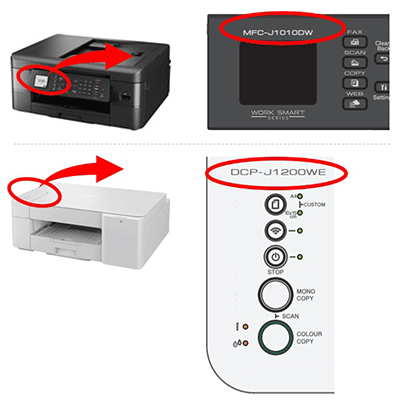
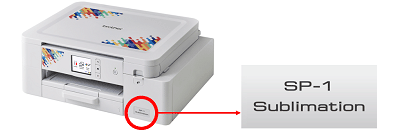
 Inkjet Printer / Fax / MFC / DCP
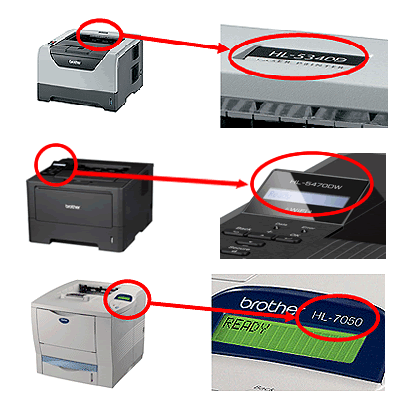
 Monochrome Laser Printer
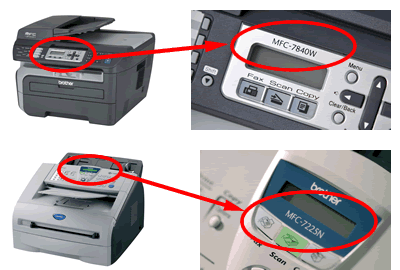
 Monochrome Laser Fax / MFC / DCP
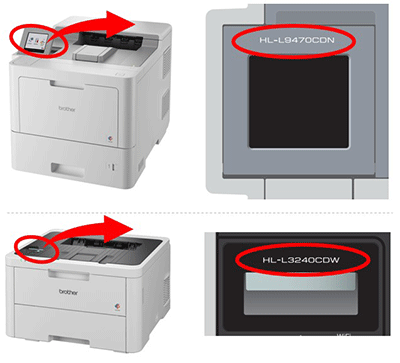
 Color Printer (Laser / LED)


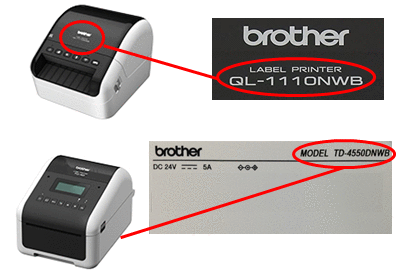
 Label Printer (QL/TD), Industrial Label Printer (TJ)
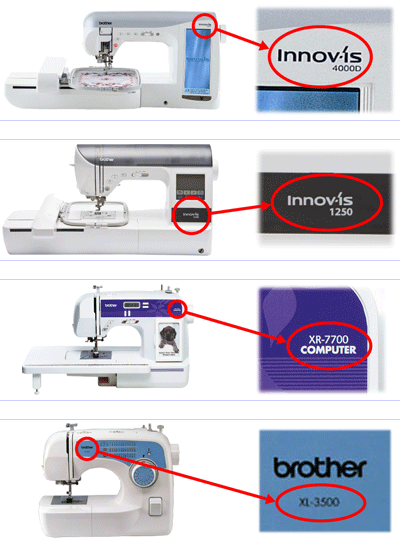
 Home Sewing Machine
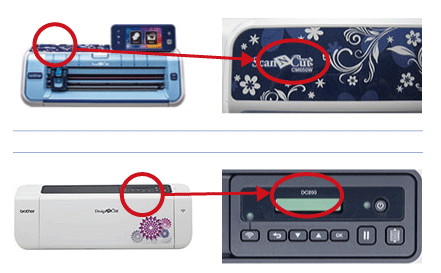
 Cutting Machine
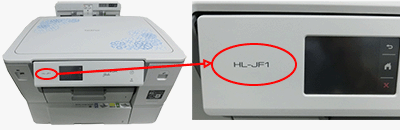
 Creative Printer (HL)